I recently returned to social media after being away for years—and that was entirely by choice. This time around, I decided to focus on LinkedIn instead of Instagram because I wanted to spend more time learning from and engaging with other businesses.
Coming back with fresh eyes has been fascinating. Trends that long-time LinkedIn users probably scroll past without a second thought immediately stood out to me. One trend, in particular, has me scratching my head.
Money.
More specifically, posts that lead with money.
"My client made $42,000."
"I generated six figures."
"This strategy produced $87,000 in 30 days."
Maybe this is simply how it works on LinkedIn. Maybe these posts perform exceptionally well. The research certainly suggests that social proof is one of the most effective tools in marketing.
But here's my unpopular opinion.
These posts don't build trust with me.
They do the opposite.
Before anyone sharpens their pitchforks, let me be clear: I'm not accusing anyone of lying. I have no idea whether the numbers are accurate. They may very well be.
What I'm questioning is something else entirely.
Is a money brag really social proof?
IN THIS POST YOU'LL LEARN:
What the research actually says about social proof.
Why financial claims don't automatically build credibility for every reader.
The questions I find myself asking whenever I see a big revenue claim.
Why I prefer transformation over dollar amounts when telling customer stories.
Why this is one piece of conventional marketing wisdom I'm choosing to question.
What the Research Actually Says About Social Proof
The research overwhelmingly supports social proof. Testimonials, case studies, customer reviews, and referrals have all been shown to increase trust because they reduce uncertainty. Before making a purchase, people naturally look for evidence that others have had a positive experience with a product or service. That's well established, and I don't dispute it.
As a website strategist, I've spent a lot of time thinking about what actually builds trust. That's why I created resources like Proof Builder and Authority Signals. Both are based on the idea that credibility isn't built with a single impressive claim. It's built by layering believable, relevant signals that help potential customers feel confident they're making the right decision.
Where I start asking questions is when the conversation shifts from social proof to money. Somewhere along the way, we've started treating large revenue numbers as though they're the gold standard of persuasion. A client made $50,000. Someone had a six-figure launch. A strategy generated another record month. These posts seem to suggest that financial outcomes are the ultimate proof that a product or service works.
Maybe they are.
Personally, I'm not convinced.
The research tells us that social proof is effective, but that doesn't necessarily mean every form of social proof carries the same weight or builds the same level of trust. That's an important distinction, and it's the one I'd like to explore.
FAQ
Q1: What is social proof?
A1: Social proof is evidence that other people have had a positive experience with a product, service, or brand. It can include reviews, testimonials, case studies, referrals, customer stories, and other forms of third-party validation.
Q2: Does research support using social proof in marketing?
A2: Yes. Decades of marketing research suggest that social proof can increase trust and reduce uncertainty. My question isn't whether social proof works. It's whether a standalone revenue claim should automatically be considered compelling proof.

Why Money Claims Leave Me With More Questions Than Answers
Whenever I see someone post that they helped a client make $50,000, my first reaction isn't amazement.
It's doubt.
Immediately, my brain starts asking questions.
How long had the client been in business?
Were they already successful before working together?
What industry are they in?
What other marketing efforts were happening at the same time?
How much advertising did they spend?
How much of that result can honestly be attributed to the product or service being promoted?
Was this a typical outcome or an exceptional one?
Without that context, a dollar amount tells me surprisingly little.
That's why these posts don't function as proof in my mind.
They function as claims.
Again, that doesn't mean they're false. It simply means I don't have enough information to evaluate them.
Maybe other people are comfortable filling in those blanks.
I'm not.
FAQ
Q1: Should you trust revenue claims on social media?
A1: There's nothing wrong with reading them. I simply think they're worth viewing with a healthy dose of skepticism. Context matters, and most short social media posts don't provide much of it.
Q2: Are revenue claims always misleading?
A2: Not at all. Some may be completely accurate. My point is that accuracy and persuasiveness aren't necessarily the same thing. A true statement can still leave out important context.
Conventional Wisdom Deserves an Occasional Challenge
One thing I've learned over the years is that business advice has a funny way of becoming accepted truth. Someone discovers a tactic that works, other people repeat it, and before long it becomes conventional wisdom. Eventually, we stop asking whether it's true, under what circumstances it works, or whether it's still the best approach. We simply accept it because we've heard it often enough.
That's why one of my favorite questions is, "Says who?" Whenever someone tells me that a particular marketing tactic is the "right" way to do something, I want to know where that conclusion came from.
Who conducted the research?
What exactly was measured?
Were they measuring trust, engagement, conversions, or sales?
Those are all very different outcomes, and it's important not to treat them as though they're interchangeable.
I also think it's worth considering who the research was based on. A first-time entrepreneur desperately looking for a breakthrough may respond very differently than an experienced business owner who's learned that long-term success rarely comes down to a single tactic. Audience matters, context matters, and the questions we ask matter.
None of this is to suggest that the research is wrong. In fact, I think good research is incredibly valuable. I simply believe that critical thinking should accompany it. Conventional wisdom deserves an occasional challenge, not because it's necessarily false, but because asking better questions often leads to better marketing.
FAQ
Q1: Does questioning marketing advice mean ignoring the data?
A1: Not at all. I believe the data matters. I also believe context, experience, and good judgment matter. The best marketing decisions usually come from considering all three.
Q2: Why should marketers question conventional wisdom?
A2: Because every business, audience, and situation is different. Understanding why something works is often more valuable than simply knowing that it worked somewhere else.

I'd Rather Hear About the Transformation
This is where my opinion probably diverges from conventional wisdom.
If I'm considering hiring someone, I honestly don't care nearly as much about how much money they claim their client made as I do about what actually changed in that client's life or business.
Tell me something like:
They finally stopped second-guessing every marketing decision because they had a clear strategy.
They went from feeling embarrassed to send people to their website to proudly sharing it with prospective customers.
They finally felt like a legitimate business owner instead of someone who was constantly trying to keep up.
Those transformations are human and therefore relatable, but most importantly, they're believable.
Ironically, those transformations often lead to increased revenue. A business owner who feels confident in their messaging is more likely to market consistently. A website that clearly communicates value is more likely to convert visitors into customers. A clearer strategy often produces better business results over time.
Revenue may be the outcome, but it isn't the story.
The story is what changed, why it mattered, and what your next customer sees themselves experiencing.
That's the kind of marketing I remember because it's rooted in something deeper than a number. It speaks to the emotional reason people buy in the first place.
Very few business owners wake up thinking, "I hope someone helps me make another $25,000 this quarter." They wake up wanting more confidence, more freedom, less stress, better clients, more time with their families, or the reassurance that their hard work is finally paying off.
Those are the stories I'd like to hear more often.
FAQ
Q1: Why is transformation more persuasive than revenue?
A1: Because people connect with emotions before they connect with numbers. They imagine themselves becoming more confident, less overwhelmed, or more successful. A dollar amount is difficult to relate to without context. A transformation is much easier to picture.
Q2: Should you share financial results in your marketing?
A2: Only if they're genuinely relevant to your business. If you're an investment advisor, retirement planner, financial coach, or someone whose core service revolves around helping clients grow or manage their money, then financial outcomes are naturally part of the conversation. For most other businesses, I'd rather hear about the transformation. Tell me what changed, how your client's life or business improved, and why it mattered. That's the kind of story that earns my trust.

Most business owners know they should be collecting testimonials and client feedback, but they aren’t sure what to ask—or how to ask in a way that actually produces useful, credible proof. Vague requests lead to vague responses, and great client experiences often go undocumented.
That’s why I created Proof Builder—a strategic feedback system that shows you exactly what questions to ask, when to ask them, and how to turn real client responses into strong, trust-building testimonials.
Instead of awkward requests or unusable blurbs, you’ll walk away with clear, permission-based proof you can confidently use across your website and marketing.
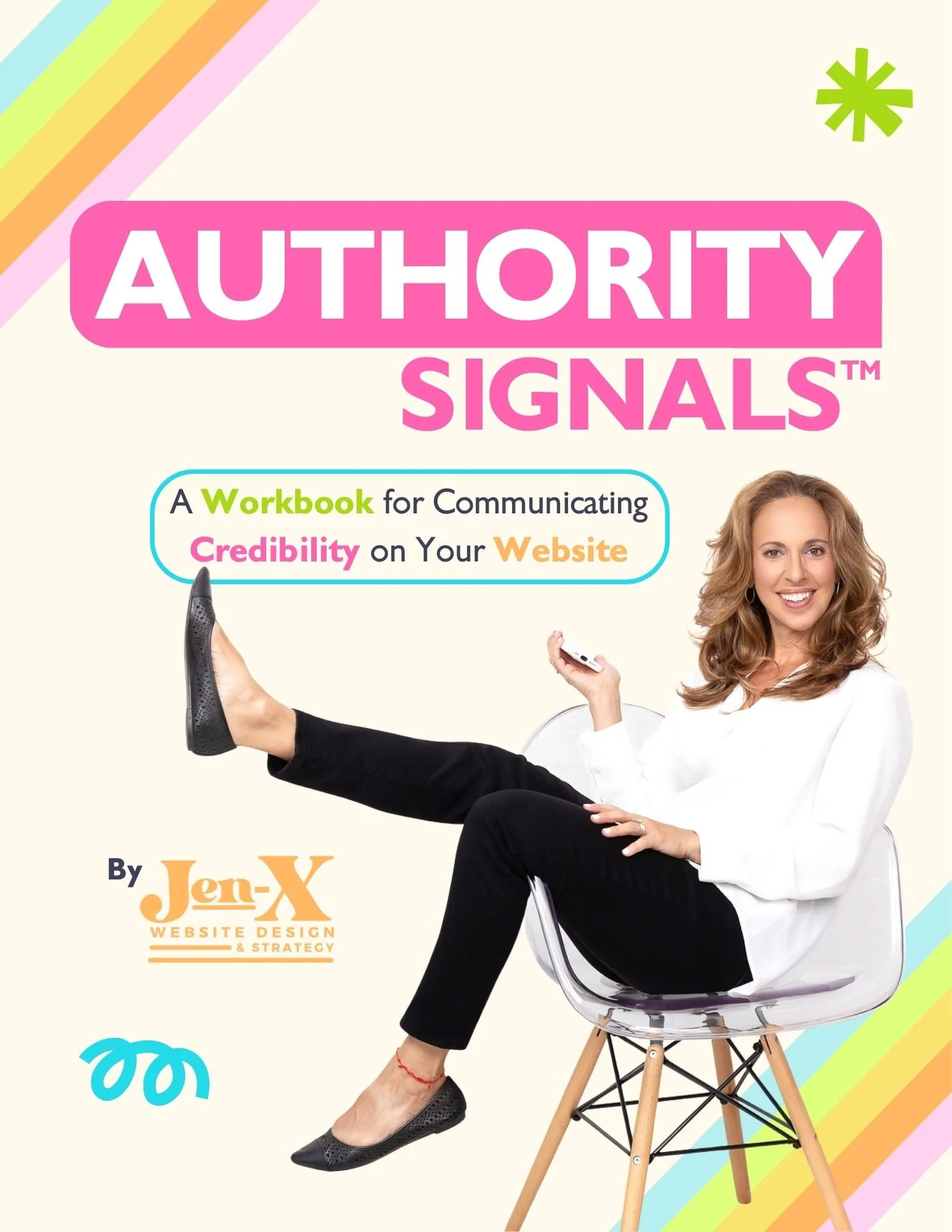
Most business owners already have credibility—but their website doesn’t always show it. Some overlook authority they didn’t realize they had. Others know their expertise but struggle to communicate it clearly in a way visitors can quickly understand.
That’s why I created Authority Signals—a practical, fill-in-the-blank workbook that helps you uncover the authority you may be missing and clarify how to convey the authority you already know you have, using proven website signals like testimonials, statistics, credentials, logos, awards, and press.
Instead of guessing what to say or overloading your site, you’ll identify the proof that actually matters—so visitors can recognize your value quickly and feel confident choosing you.
What Actually Earns My Trust
This style of marketing may perform incredibly well. The engagement metrics may be through the roof, and there are probably plenty of marketers who swear by leading with impressive revenue numbers. If that's the case, great. It still doesn't work on me.
To me, these posts feel like they're aimed at the low-hanging fruit—people who won't stop to ask questions or look for the missing context. I have a hard time believing I'm the only one who reacts that way.
Personally, I'd much rather hear about the transformation. Focus on the shift your client experienced and what changed for them on a deeper level. Those are the stories I remember because they're human, emotionally believable, and ultimately far more persuasive than a number.
This page contains affiliate links