How to Choose the Right Web Designer for Your New Hampshire Business
Choosing a web designer is an important decision for any business. Your website is often the first place potential customers learn about your company, evaluate your credibility, and decide whether to reach out.
Not all web designers approach websites the same way. Some focus on strategy, messaging, and long‑term growth, while others prioritize speed and low cost.
IN THIS POST YOU'LL LEARN:
What separates strategic web designers from template builders
Red flags to watch for when hiring a designer
How websites should support long‑term marketing
Questions you should ask before hiring a web designer
Look for Strategy, Not Just Design
A website should do more than look good. It should communicate clearly, guide visitors through your services, and help potential clients understand why they should work with you.
Design is important, but strategy is what makes a website effective. A strong website considers messaging, page structure, navigation, and how visitors move through the site.
A visually attractive website without clear messaging often fails to convert visitors into inquiries.
FAQ
Q1: Is website design mostly about visuals?
A1: Visual design is important, but messaging, structure, and strategy play an even larger role in helping visitors understand your services.
Q2: Should a web designer help with messaging?
A2: Many experienced designers consider messaging and structure as part of the website planning process because design alone cannot communicate a business's value.

Choose Someone Who Understands Local Businesses in New Hampshire
Working with someone who understands the New Hampshire business environment can be valuable. Local designers tend to understand regional industries, community connections, and how local customers search for services.
A designer who works with New Hampshire businesses may also be more familiar with local SEO signals that help websites appear in regional searches.
Local partnerships also tend to be more collaborative and long‑term rather than purely transactional.
FAQ
Q1: Does hiring a local web designer matter?
A1: It can. A local designer often understands the market and how customers in the region search for services.
Q2: Can local knowledge affect SEO?
A2: Yes. Local context can help shape content, service pages, and blog topics that align with regional search behavior.

Red Flags to Watch for When Hiring a Web Designer
Not every web design company operates the same way. Some agencies prioritize speed and volume rather than thoughtful strategy.
These companies often rely on generic templates, stock imagery, and inexperienced designers in order to produce large numbers of websites quickly.
You can often recognize these agencies by how heavily they promote how "affordable" their websites are.
While price is always a consideration, extremely low‑cost websites are usually built with speed and volume in mind rather than long‑term results.
Your website represents your business. It deserves more attention than a rushed template built as quickly as possible.
FAQ
Q1: Are inexpensive websites always a problem?
A1: Not necessarily, but very low‑cost websites are often built using generic templates and minimal strategy.
Q2: How can I tell if a website was built from a template?
A2: Many template‑based sites look very similar, contain large blocks of filler text, and rely heavily on stock images.
Understand the Difference Between Paid Traffic and Organic Traffic
Some marketing agencies promote SEO services, but their primary strategy is actually running Google Ads.
Ads can certainly play a role in marketing, but they are fundamentally different from organic search traffic.
Paid traffic stops the moment you stop paying for ads.
Organic traffic, on the other hand, comes from search engines because your website provides helpful information and answers to people's questions.
Organic traffic tends to convert better because visitors are actively searching for solutions rather than clicking an advertisement.
This does not mean businesses should never run ads. Advertising can be helpful in specific situations. However, relying entirely on paid traffic without building organic visibility can limit long‑term growth.
FAQ
Q1: Do Google Ads help with SEO?
A1: No. Ads can drive traffic while they are running, but they do not improve organic search rankings.
Q2: Which converts better, ads or organic traffic?
A2: Organic traffic often converts better because visitors are actively searching for information or services.
Look for Experience and a Clear Process
Experienced designers usually have a clear process for planning and building websites.
This process may include:
understanding your business and audience
organizing website structure
developing clear messaging
designing pages that guide visitors toward action
A defined process helps ensure that your website supports your business goals rather than simply existing online.
FAQ
Q1: Should a web designer have a defined process?
A1: Yes. A structured process helps ensure that strategy, messaging, and design are aligned.
Q2: What questions should I ask before hiring a web designer?
A2: Ask how they approach messaging, SEO, website structure, and what happens after the website launches.
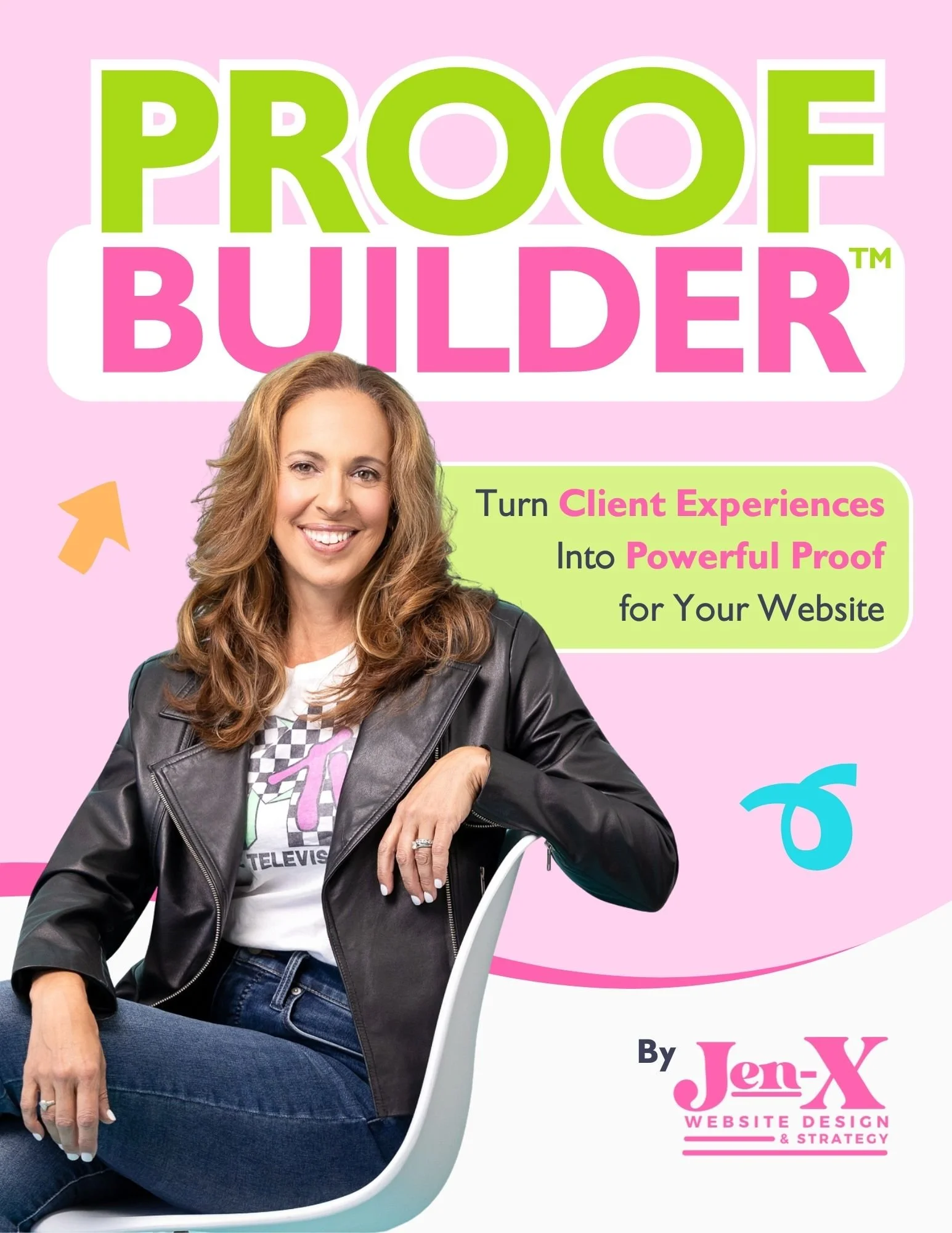
Most business owners know they should be collecting testimonials and client feedback, but they aren’t sure what to ask—or how to ask in a way that actually produces useful, credible proof. Vague requests lead to vague responses, and great client experiences often go undocumented.
That’s why I created Proof Builder—a strategic feedback system that shows you exactly what questions to ask, when to ask them, and how to turn real client responses into strong, trust-building testimonials.
Instead of awkward requests or unusable blurbs, you’ll walk away with clear, permission-based proof you can confidently use across your website and marketing.
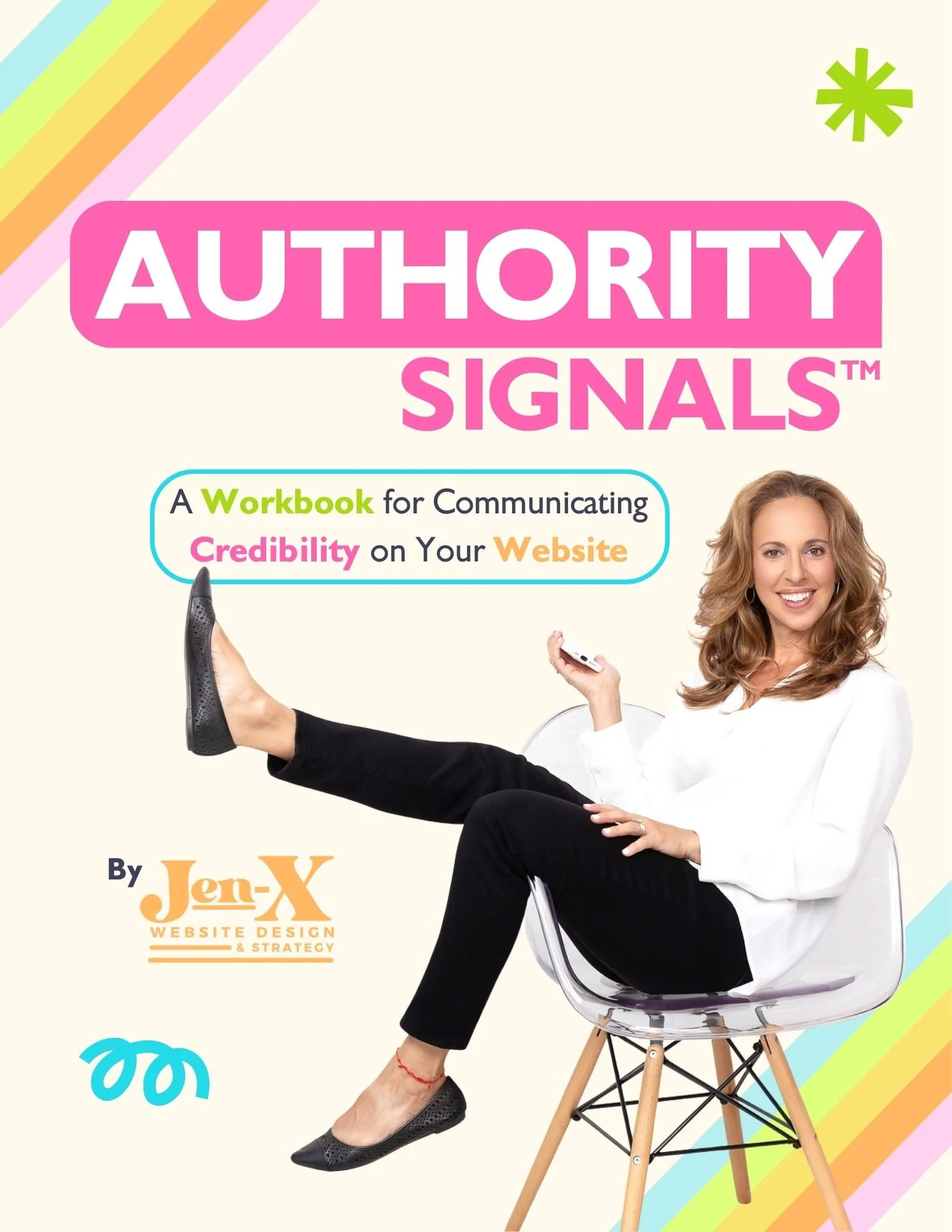
Most business owners already have credibility—but their website doesn’t always show it. Some overlook authority they didn’t realize they had. Others know their expertise but struggle to communicate it clearly in a way visitors can quickly understand.
That’s why I created Authority Signals—a practical, fill-in-the-blank workbook that helps you uncover the authority you may be missing and clarify how to convey the authority you already know you have, using proven website signals like testimonials, statistics, credentials, logos, awards, and press.
Instead of guessing what to say or overloading your site, you’ll identify the proof that actually matters—so visitors can recognize your value quickly and feel confident choosing you.
A Website Should Support Your Business Long‑Term
A website should not be treated as a one‑time project. It should support your marketing and visibility over time.
Strong websites are designed to support:
search visibility
blogging and content
lead generation
email marketing
ongoing updates
When a website is structured strategically, it becomes a valuable marketing asset rather than a static brochure.
FAQ
Q1: Is launching a website the final step?
A1: No. A website should continue evolving through updates, content, and marketing efforts.
Q2: How do websites generate leads over time?
A2: Consistent content, clear messaging, and search visibility help bring the right visitors to your site.

Final Thoughts
Choosing a web designer is about more than selecting someone who can create an attractive website. The right designer should understand strategy, messaging, and how websites support long‑term marketing.
If you are currently evaluating web designers and would like an experienced perspective, you are welcome to schedule a free discovery call. We can talk through your goals, your current website, and what kind of approach might work best for your business.
This page contains affiliate links