They Were Ready to Buy...Until They Stopped Trusting You
You spot a beautiful little boutique while you're out shopping. The window display catches your eye, and for a second you think: this place might have exactly what I'm looking for.
You step inside expecting to browse for a few minutes. Before you've taken three steps, a salesperson appears beside you.
"Can I help you find something?"
You smile politely. "I'm just looking."
"Well, let me know if you need anything."
Perfect, or so you think. A few seconds later she's holding up a blouse she thinks would look great on you. You thank her, hang it back on the rack, and keep browsing. Then she returns with a pair of pants. A few minutes later, a jacket.
You tell yourself she's just trying to be helpful. Then she hands you a simple white T-shirt, and you actually love it. You flip over the price tag and your stomach drops.
She catches your expression immediately. "I know it seems expensive," she says, "but let me tell you why it's worth it." And then you're getting a lesson on the fabric, the stitching, the designer, the craftsmanship, why this shirt is superior to every other T-shirt you've ever owned.
You barely hear a word of it, because long before you saw that price tag, something had already changed. When she ignored your "I'm just looking" and kept following you around the store, she stopped feeling like someone who wanted to help you find the right thing. She started feeling like someone who wanted to make a sale. The trust you'd walked in with had already begun slipping away, and you never said a word about it. You smiled, you thanked her, and you walked out empty-handed.
If she told the story later, she'd probably blame the price. "My customer loved the shirt," she'd tell a coworker. "She just didn't want to spend that much." She may genuinely believe that. She'll likely never know the sale was lost the moment you stopped believing she had your best interests in mind.
That got me thinking about how often the same thing happens in marketing. We assume people leave because our prices are too high, a competitor beat us, or they were never serious buyers to begin with. Sometimes that's true. But what if they were ready to buy? What if they came to your website hoping they'd finally found the right solution, and quietly lost trust somewhere along the way? The uncomfortable part is that they'd probably never tell you. They'd just do what you did in the boutique. They'd leave.
Trust is rarely lost all at once
When we picture trust breaking down, we imagine dramatic moments. A company lies. A product fails. Customer service is rude. Those things do destroy trust, but most of the time, trust erodes much more quietly than that.
A website spends three paragraphs talking about the company before it acknowledges the visitor's problem. An email opens with a pitch instead of a moment of empathy. A contact form asks for twelve pieces of information before someone can ask a simple question. A homepage is full of vague promises, phrases like "innovative solutions" and "exceptional service," that never actually explain what makes the business different.
None of that is catastrophic on its own. Each one is just a small moment that makes someone pause, and every pause adds a little more uncertainty.
Here's what that looks like in practice. Say someone lands on a homepage for a marketing agency and the first thing they read is "We are a full-service digital marketing agency committed to delivering innovative solutions that drive results." They've learned nothing. They don't know who the agency serves, what problem it solves, or why it's different from the twelve other tabs they have open. So they scroll, looking for something that sounds like it was written for them specifically. If they don't find it in the first few seconds, they leave, and they never tell the agency why.

People want to stop searching
This is something business owners tend to forget: most people don't wake up hoping they'll get to compare six different service providers today. They're looking for a reason to stop searching. They want to believe they've found the right place.
So when someone lands on your website, they're not hoping you'll convince them to buy. They're hoping you'll convince them they don't have to keep looking. That's a different goal than the one most marketing is built around. It reframes the question from "how do I persuade someone to choose me" to "what would help someone feel confident they've already found the right person." Those two questions lead to very different websites.
Every interaction answers a question
Prospects are constantly looking for clues, not because they're cynical, but because hiring someone involves risk. Can this person actually solve my problem? Very few people ask that out loud. Instead, they answer it for themselves based on what they experience when they land on your site, read your emails, or fill out your form.
A clear explanation of your process tells them you have a plan. Testimonials reassure them that people like them have succeeded before. Genuinely helpful content shows you're generous with your expertise instead of guarding it until someone pays. Clear, specific messaging tells them you've taken the time to actually understand the people you serve.
Everything communicates something. The only question is whether it's communicating what you intended.

The sale is often lost before you know you're selling
I keep coming back to that boutique. The salesperson probably believed she lost the sale because the shirt was expensive. She never knew I'd already decided, well before that, that I wasn't buying anything from her store. Not because I didn't like the merchandise. Not because I couldn't afford it. Because somewhere between "I'm just looking" and the lecture on Italian cotton, I stopped believing she was helping me make a good decision. I started believing she was helping herself make a sale.
That's a subtle difference. It's also the difference between marketing that builds trust and marketing that quietly erodes it.
So look at your own website this week. Not the headline, not the call to action. Read the first three sentences a stranger would see, and ask whether they're about your business or about the person reading them. Then look at your intake process, your first email, your contact form, and ask the same thing at each step: does this feel like I'm being helped, or like I'm being sold to?
You may not find a dramatic problem. You'll probably find a handful of small ones, the same kind that sent me out of that boutique empty-handed. Fix those, and you'll start closing sales you didn't even know you were losing.

Most business owners know they should be collecting testimonials and client feedback, but they aren’t sure what to ask—or how to ask in a way that actually produces useful, credible proof. Vague requests lead to vague responses, and great client experiences often go undocumented.
That’s why I created Proof Builder—a strategic feedback system that shows you exactly what questions to ask, when to ask them, and how to turn real client responses into strong, trust-building testimonials.
Instead of awkward requests or unusable blurbs, you’ll walk away with clear, permission-based proof you can confidently use across your website and marketing.
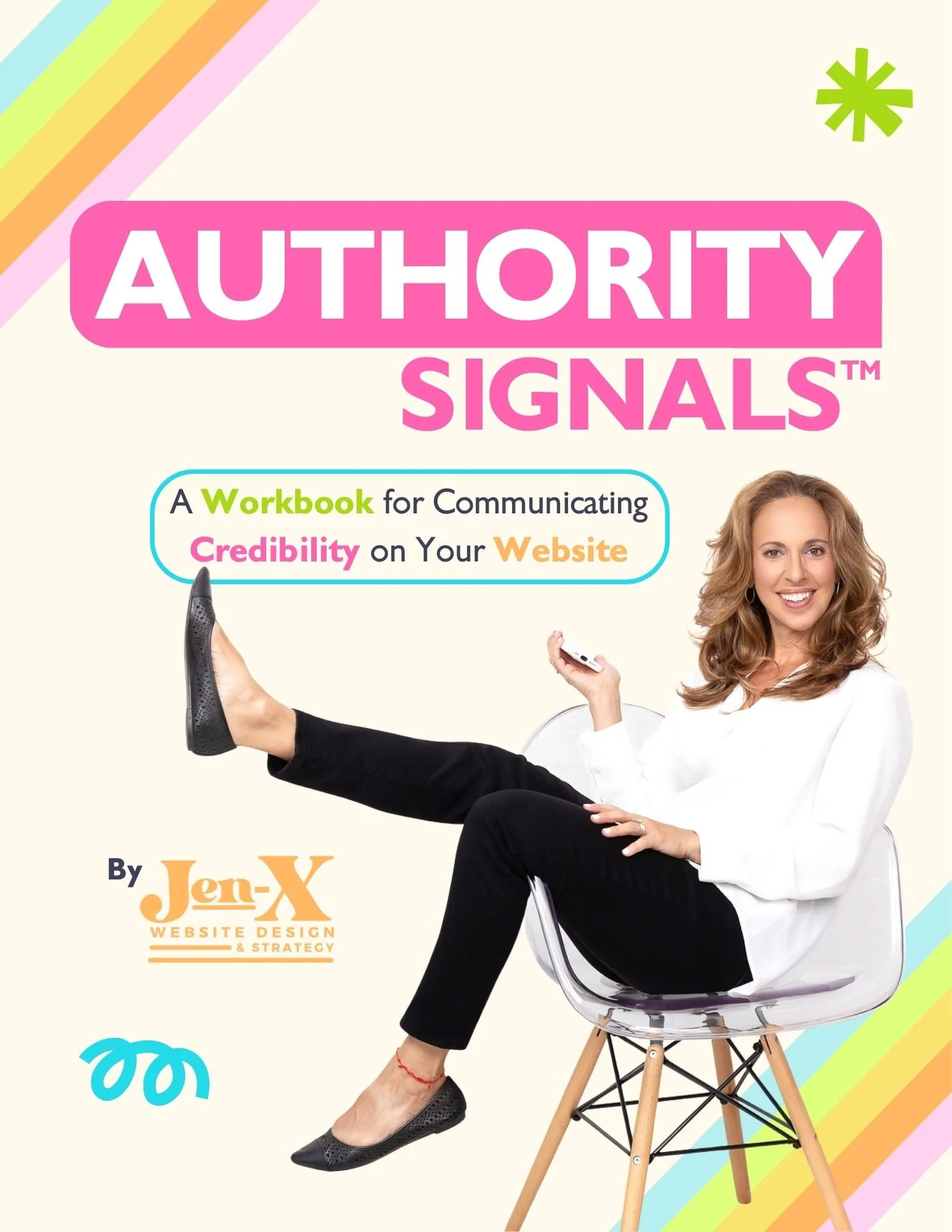
Most business owners already have credibility—but their website doesn’t always show it. Some overlook authority they didn’t realize they had. Others know their expertise but struggle to communicate it clearly in a way visitors can quickly understand.
That’s why I created Authority Signals—a practical, fill-in-the-blank workbook that helps you uncover the authority you may be missing and clarify how to convey the authority you already know you have, using proven website signals like testimonials, statistics, credentials, logos, awards, and press.
Instead of guessing what to say or overloading your site, you’ll identify the proof that actually matters—so visitors can recognize your value quickly and feel confident choosing you.
This page contains affiliate links