You spent weeks polishing your website, setting up your services, and crafting clear copy. But when local clients search for your services on Google, your profile is nowhere to be found or worse, it lists outdated hours and a dead contact number.
Many business owners treat their Google Business Profile as a "set it and forget it" directory listing from five years ago.
When your website messaging doesn't match your Google ecosystem, search engines get confused about your credibility and high-intent buyers move on to a competitor who looks actively open for business.
IN THIS POST YOU'LL LEARN:
How mismatched business data across the web silently hurts your local search rankings.
Why Google prioritizes active, frequently updated profiles over static websites.
A 15-minute checklist to align your site strategy with your Google ecosystem.
Strategic ways to turn Google reviews into high-converting website social proof.

The Disconnect Between Your Site and Search Results
Google’s main goal is to deliver accurate, trustworthy answers to searchers. If your website says one thing but your external listings say another, Google loses confidence in recommending you.
Neglecting your profile listing creates critical leaks in your lead pipeline:
Confused High-Intent Searchers: When prospects see conflicting phone numbers, old addresses, or unanswered questions on search results, they hesitate to reach out.
Lowered Search Visibility: Google ranks businesses higher when their NAP data (Name, Address, Phone number) is 100% consistent across every web mention.
Wasted Organic Traffic: A client looking for your business on Google Maps who sees "Hours May Differ" or no recent updates will assume you’re inactive.
FAQ
Q1: Do I need a Google Business Profile if I operate an online-only service business?
A1: Yes! Even if you don't have a physical storefront, setting up a verified profile with designated service areas builds massive domain authority and local search credibility.
Q2: How often should I update my business details on Google?
A2: Audit your profile quarterly, or immediately whenever your operating hours, core services, or primary booking links change.
A 3-Step Alignment Strategy for Instant Search Trust
Connecting your website strategy with your search profile doesn't require hours of SEO maintenance just a systematic tune-up.
Follow these practical steps to ensure search engines and humans see a thriving business:
Standardize Your NAP Data: Ensure your business name, phone number, and address match word-for-word between your site footer and your Google profile.
Link Directly to Specific Landing Pages: Instead of dropping your homepage link everywhere, direct your profile buttons straight to your primary booking or contact page.
Embed Recent Reviews on Your Site: Use native layout blocks or clean integrations to display recent Google reviews on your service pages for instant social proof.
FAQ
Q1: What is the best way to ask happy clients for Google reviews?
A1: Send a short, direct email right after completing a project with a direct link to your review form—don't make them search for your profile manually.
Q2: Does responding to Google reviews actually help my SEO?
A2: Yes! Google explicitly states that regularly responding to both positive and negative reviews signals active management and improves your local ranking signals.

Most business owners know they should be collecting testimonials and client feedback, but they aren’t sure what to ask—or how to ask in a way that actually produces useful, credible proof. Vague requests lead to vague responses, and great client experiences often go undocumented.
That’s why I created Proof Builder—a strategic feedback system that shows you exactly what questions to ask, when to ask them, and how to turn real client responses into strong, trust-building testimonials.
Instead of awkward requests or unusable blurbs, you’ll walk away with clear, permission-based proof you can confidently use across your website and marketing.
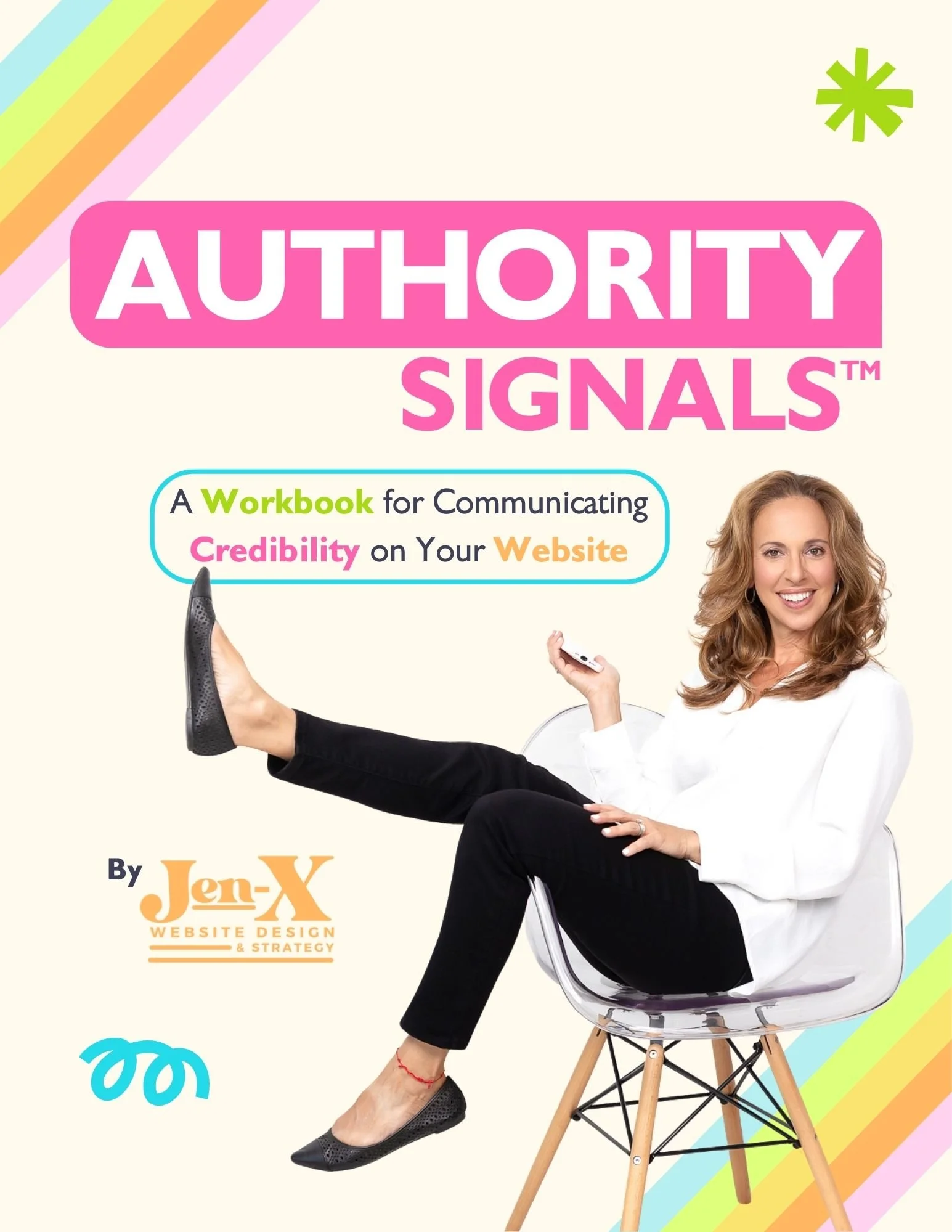
Most business owners already have credibility—but their website doesn’t always show it. Some overlook authority they didn’t realize they had. Others know their expertise but struggle to communicate it clearly in a way visitors can quickly understand.
That’s why I created Authority Signals—a practical, fill-in-the-blank workbook that helps you uncover the authority you may be missing and clarify how to convey the authority you already know you have, using proven website signals like testimonials, statistics, credentials, logos, awards, and press.
Instead of guessing what to say or overloading your site, you’ll identify the proof that actually matters—so visitors can recognize your value quickly and feel confident choosing you.
Final Thoughts
Your website and your Google profile are two sides of the same digital front door.
When you align your search listings with a fast, clear website experience, you make it effortless for high-intent clients to trust your brand and book your services.
This page contains affiliate links